The Art of the Equine Commission
Capturing Character Beyond Likeness
Every horse has a presence that extends beyond physical appearance. The tilt of the head, the quality of attention, the particular way movement expresses personality these subtle elements distinguish a living being from a merely accurate rendering. When clients commission equine portraits, they're rarely seeking photographic replication. What they want, though they may not articulate it this way, is for me to see what they see: the essential character that makes their horse uniquely theirs.
Beyond Documentary
The history of equine portraiture is largely a history of documentation breeding records, ownership markers, evidence of valuable property. George Stubbs, despite his extraordinary talent, was fundamentally employed to record horses with anatomical precision for their aristocratic owners. The paintings were beautiful, but their primary function was documentary.
Contemporary equine commissioning operates differently. Today's clients already have thousands of photographs. What they cannot achieve through photography, no matter how skilled the photographer, is the synthesis of observation, technique, and interpretation that distinguishes painting. A successful commission captures not a single moment but an accumulated understanding the character revealed through sustained attention rather than the split-second of a shutter.
This shift from documentation to interpretation changes the entire commissioning process. The conversation begins not with measurements and coat color but with stories: how the horse moves, what captures their attention, the particular quality of their presence. These narratives inform everything that follows.
The Classical Approach
My commissioning process remains grounded in classical technique for specific reasons. Oil paint allows for gradual development of form, the slow building of volume, the subtle modulation of light, the patient layering that creates depth. This technical approach mirrors the interpretive work: both require sustained observation, careful adjustment, and the patience to let understanding develop over time.
Working from photographic reference, I'm looking for consistent patterns rather than perfect single images. How does the horse typically carry their head? What's their characteristic expression? Where does light naturally fall across their form? Multiple reference images reveal more than any single perfect shot they show the range of expression and movement that defines the individual.
The painting develops through successive layers, each refining the last. Initial washes establish composition and value structure. Subsequent layers build form and detail. Final glazes unify the whole and add luminosity. This technical process, unchanged in fundamentals for centuries, provides the control necessary for precise interpretation.
What Makes a Successful Commission
The most successful commissions share certain qualities beyond technical proficiency. They capture what I think of as "presence" that quality of attention and character that makes viewers feel they're encountering not a representation but a personality. This requires balancing accuracy with interpretation, fidelity with artistic vision.
I've learned that clients are remarkably perceptive about their horses. They'll immediately recognize when something is slightly off, not necessarily because of anatomical error, but because the character isn't quite right. Getting the character right often means departing from strict photographic reference. A horse might habitually carry their ears forward, even if the best reference photo shows them pinned back. The painting should reflect typical rather than accidental expression.
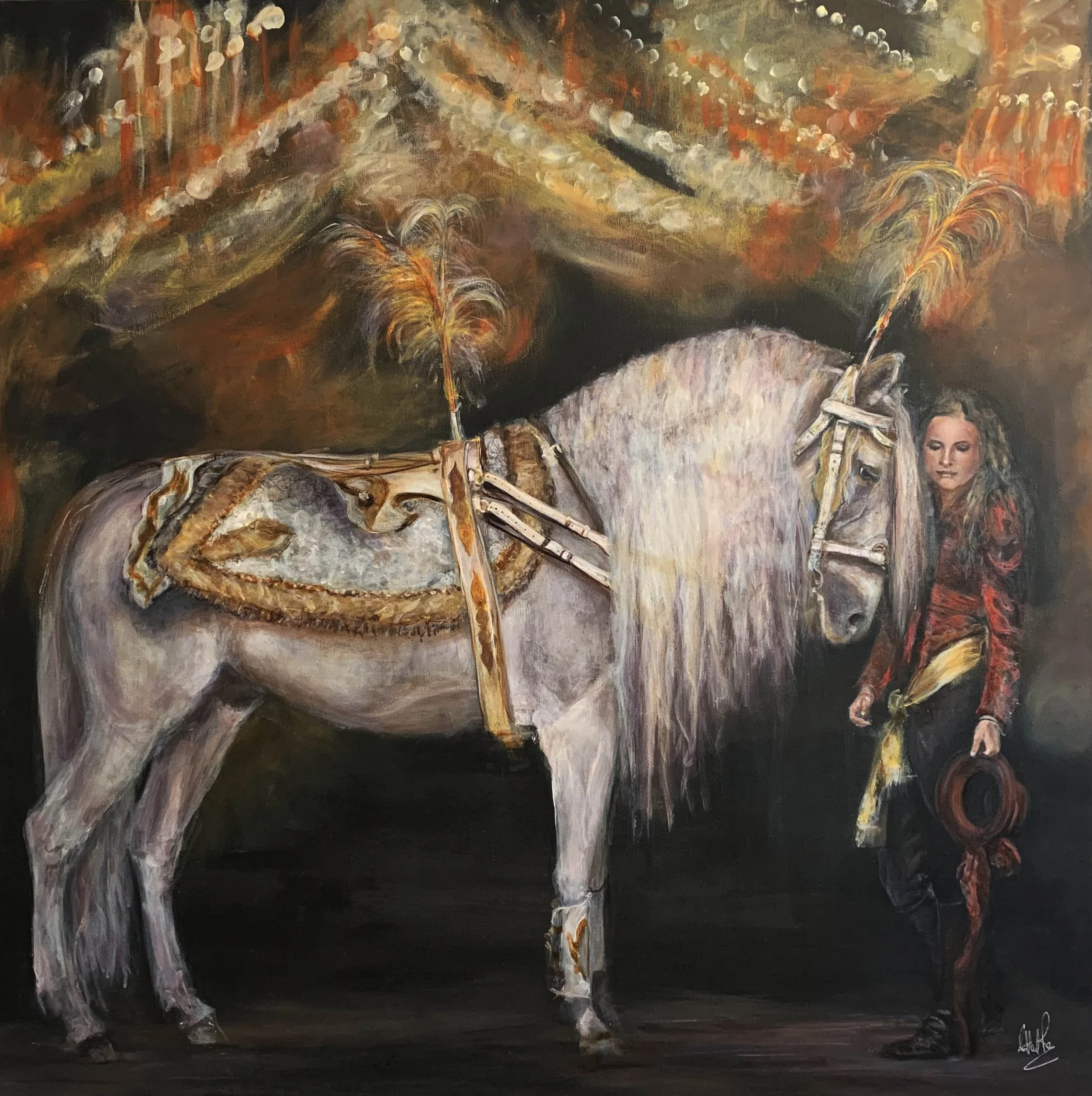
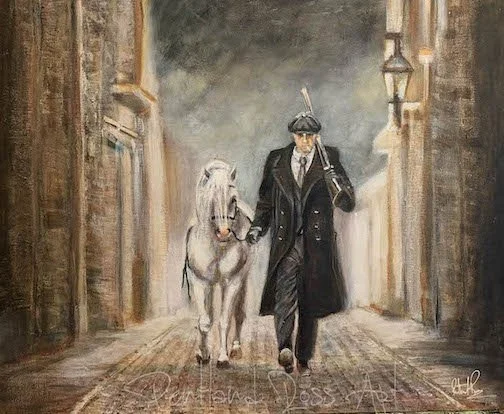
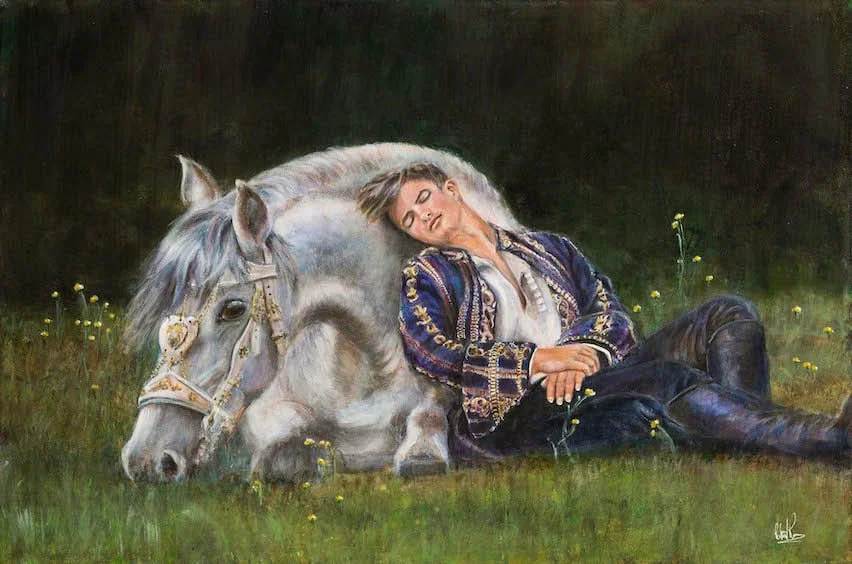
This is where classical training proves invaluable. Understanding equine anatomy means I can adjust reference without losing accuracy. Knowing how light behaves allows me to improve composition without sacrificing realism. The technical foundation provides freedom to interpret rather than merely copy.
The Collector's Perspective
From the collector's viewpoint, commissioning an equine portrait represents something beyond acquiring artwork. It's about preserving a relationship the partnership between horse and owner in a form that transcends photography's limitations. A well executed commission becomes an heirloom, carrying not just visual information but the accumulated meaning of that relationship.
This explains why successful equine commissions often resonate beyond their original owners. The careful attention to character that satisfies the client also creates work that functions as serious portraiture. Viewers who never met the horse can still recognize presence and personality. The work succeeds as both personal memorial and standalone art.
Craft, Time, and Value
Classical oil painting cannot be rushed. The technical process demands time for paint to dry between layers, but more importantly, interpretation requires sustained engagement. Quick execution produces quick work accurate perhaps, but lacking the depth that comes from patient observation and careful consideration.
This relationship between time and quality remains constant despite technological change. Photography democratised image making, and digital tools revolutionised illustration, but oil painting's essential nature the slow building of form through layered translucent colour remains unchanged. This constancy provides both challenge and value. The technique cannot be shortcut, which means work created this way carries inherent distinction.
For collectors who appreciate craftsmanship, this matters. In an era of instant reproduction and AI generated imagery, there's renewed appreciation for work that requires genuine skill and sustained effort. A commissioned oil painting represents not just artistic vision but demonstrable mastery of demanding technique.
Heritage and Contemporary Practice
The commissioning tradition connects contemporary practice to centuries of artistic heritage. When clients commission equine portraits today, they participate in a practice that extends from Roman patricians commissioning horses for villa frescoes through aristocratic patrons employing Stubbs and Ferneley. Yet contemporary commissioning also differs fundamentally it's driven by personal connection rather than documentation of assets.
This evolution enriches rather than diminishes the tradition. The technical foundation remains classical, but the purpose is more emotionally resonant. We're creating not records of property but celebrations of relationship. This shift produces work that's simultaneously traditional in execution and contemporary in meaning.
For collectors seeking work that honors craft while remaining personally meaningful, equine commissioning offers rare opportunity. The result is neither purely decorative nor purely sentimental, it's portraiture in the fullest sense, capturing presence and character through patient observation and classical technique.
For commission enquiries, please visit the Private Commission page or contact studio@pentlandrossart.com